What Is a Patella Band? How It Works, Fits and Supports Movement
A patella band is a narrow, adjustable knee support worn directly below the kneecap. It applies focused pressure across the patellar tendon while leaving most

side stabilization, an open patella or a wider adjustment range. The correct choice depends on the target activity, support promise, sales channel, size strategy, packaging and user education—not on which design looks more technical.
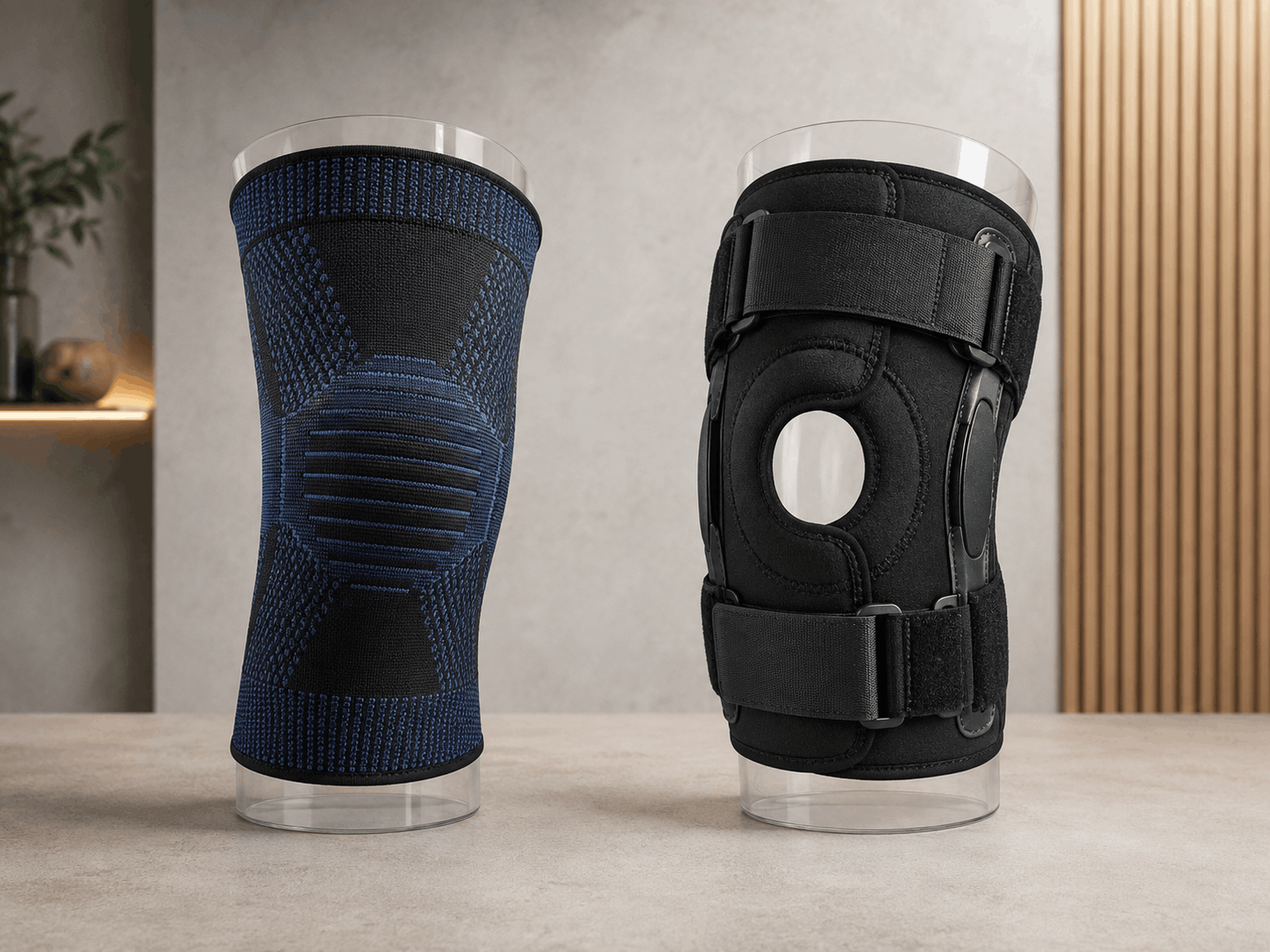
A sleeve creates support mainly through elastic compression, close fit, warmth and body awareness. A brace adds mechanical structure through straps, reinforced panels, side stays, hinges or shaped openings.
This difference affects almost every development decision. Sleeves are generally lighter, easier to package and easier to wear under clothing. Braces provide more adjustable or directional control but require more components, sewing operations, fitting instructions and inspection points.
Decision factor | Compression knee sleeve | Adjustable knee brace |
Main support method | Elastic compression and close fit | Straps, panels and stabilizing components |
Typical profile | Lightweight and low bulk | More structured and visible |
Sizing | Usually multiple graded sizes | Graded or broader adjustable sizing |
User setup | Pull on and align | Position, wrap and adjust |
Key comfort risk | Cuff pressure, rolling or slippage | Strap pressure, bulk or component misalignment |
Main cost drivers | Yarn, knit density, silicone, size range and logo | Foam/fabric, fasteners, stays, straps, sewing and assembly |
Packaging need | Compact pouch, box or band | Larger pack with clearer fitting instructions |
Best product role | Everyday sport, fitness and flexible support | Adjustable or higher-structure support concepts |
Compression sleeves have broad application because the product is simple to understand and easy to integrate into an active routine. They can be designed for running, gym training, court sports, work or general movement by changing material, thickness, length and compression zones.
They are especially useful when the range needs:
However, simplicity does not remove sizing risk. Because a sleeve relies on close fit, incorrect circumference grading can make the product feel ineffective or uncomfortably tight. A well-built size chart and wear-test program remain essential.
Adjustable braces can address users who want visible structure and control. Straps allow the fit to be changed during the day, while side stays, hinges or shaped pads create a stronger technical appearance and a more specific support proposition.
They are useful when the product plan requires:
The risk is adding components without a defined benefit. Extra straps can create pressure points, and decorative stabilizers can add cost and bulk without improving the intended experience. Every component should solve a documented user need.
For seamless sleeves, the main variables include yarn composition, knit time, pattern complexity, size count, silicone cuff, logo method and packaging. A highly detailed jacquard pattern may increase development work even if the final sleeve looks simple.
For neoprene sleeves, foam thickness, lamination, cutting yield, seam type, printing and edge binding become more important. Pair packaging doubles the product quantity per retail unit and must be stated clearly in quotations.
Braces include more purchased components and assembly steps. Fastener quality, strap length, elastic webbing, D-rings, stays, hinges, patella pads, binding and reinforced stitching can all change the quotation. Inspection also takes longer because component position and function must be checked.
Ask for a component-level breakdown when comparing two brace quotations. One may use a thinner fastener, shorter strap or simplified stay that is not obvious in photographs.
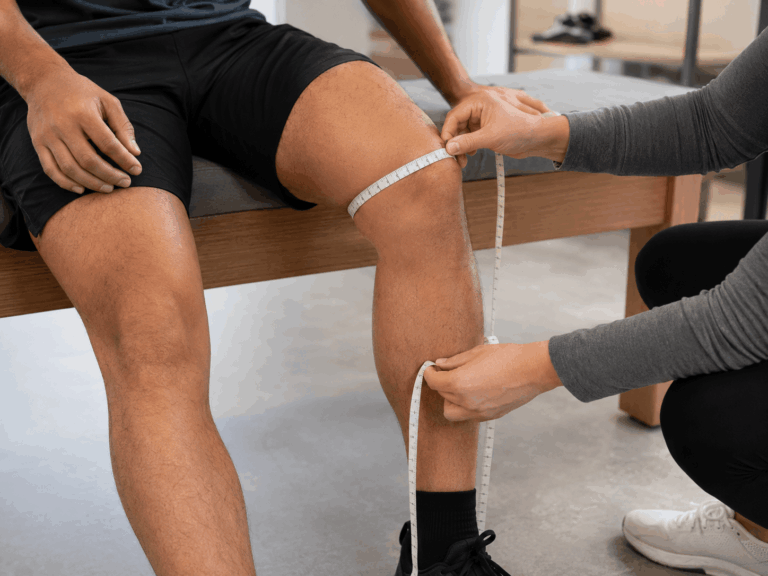
Sleeves normally require more precise size grading because the product has a fixed circumference. Adjustable braces can cover a broader interval, but “one size fits all” often creates poor fit at both ends of the range.
For either product, define:
Do not copy a size chart from a visually similar product. Stretch, pattern shape, thickness and compression target can make the same chart perform differently.
A sleeve usually needs a clear size diagram, wear orientation, care instructions and a statement showing whether the package contains one sleeve or a pair. A brace needs step-by-step fitting guidance, strap order, hinge or stay alignment and component-removal instructions when applicable.
Use photographs or simple diagrams rather than dense text. Product descriptions should explain what the construction does without making medical claims that the product or market authorization cannot support.
Many product lines benefit from a ladder rather than a single choice:
This makes price and feature differences easier to understand. It also creates internal-linking opportunities between educational articles, comparison pages and product categories.
It often has fewer components and assembly steps, but price still depends on yarn, knit complexity, size range, silicone, branding and packaging. A complex seamless sleeve can require meaningful development work.
It may cover wider body-measurement intervals, but the adjustment range must be tested. A universal claim should not be used unless the product fits the smallest and largest intended users comfortably and securely.
Sleeves are generally easier to explain and package, but accurate sizing remains critical. Braces can support a higher feature value if the page includes clear fitting instructions, component explanations and realistic use scenarios.
Not always. Seamless sleeves may use jacquard knitting or silicone printing, while braces may use woven labels, heat transfer, embroidery or TPU badges. The method should match material stretch and washing conditions.
Approve the physical sample, materials, size chart, measurements and tolerances, component list, logo, color, care label, packaging and inspection points. For a brace, also confirm strap direction and component alignment.
Choose the product role before choosing the construction. Define whether the model is intended as flexible everyday support, sport-specific performance support or adjustable structured support. Then compare development options on the custom knee sleeve and support page and review common order questions in the FAQ.
Hi, I’m Jack Wang (the CEO of Natiprol Lianyungang Corporationh), hope you like this article.
With more than 10 years of experience in sports support industry since 2008, I’d love to share with you the valuable knowledge from a Chinese supplier’s perspective.
I am looking forward to talking with you about your ideas and thoughts.
A patella band is a narrow, adjustable knee support worn directly below the kneecap. It applies focused pressure across the patellar tendon while leaving most

Quick answer A reliable knee support quality plan should control the approved sample, materials, measurements, compression feel, seams, anti-slip elements, straps or stabilizers, labeling and
Why sizing is a commercial problem, not just a technical detail Fit affects product reviews, support tickets, return costs and repeat purchases. If a sleeve
Factory-direct · NDA friendly · Sample support · OEKO-TEX/BSCI (on request)
Start a Conversation
Hi! Click one of our member below to chat on WhatsApp
Hey, how can I help you today?