Why sizing is a commercial problem, not just a technical detail
Fit affects product reviews, support tickets, return costs and repeat purchases. If a sleeve slides, rolls, pinches or bunches, users often describe the problem as poor quality even when the real cause is an unclear chart or incorrect size grading.
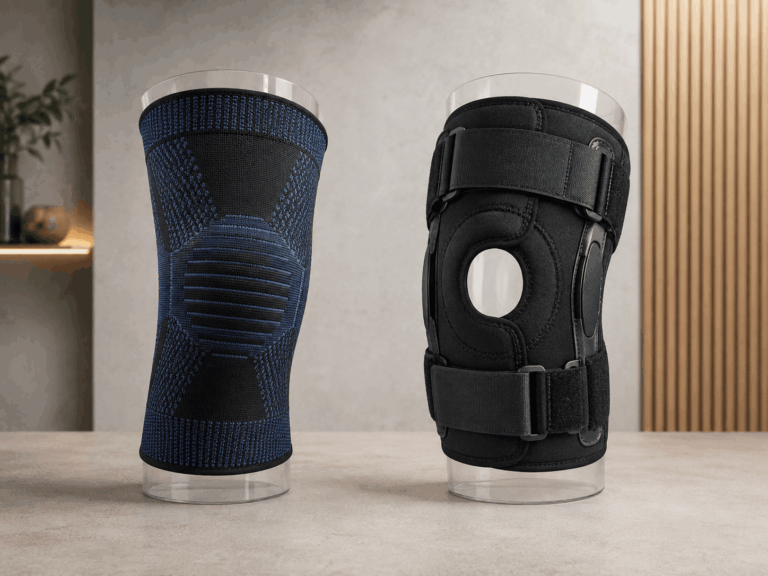
The risk becomes larger when a range includes both elastic sleeves and adjustable braces. A sleeve may depend on precise circumference, while a brace may depend on strap reach and component alignment. Each construction needs its own validated chart.
Choose measurement points that match the product
There is no universal measurement point for every knee support. Depending on the design, a chart may use:
- Circumference at the center of the kneecap
- Thigh circumference at a fixed distance above the kneecap
- Calf circumference at a fixed distance below the kneecap
- A combination of thigh, knee and calf measurements
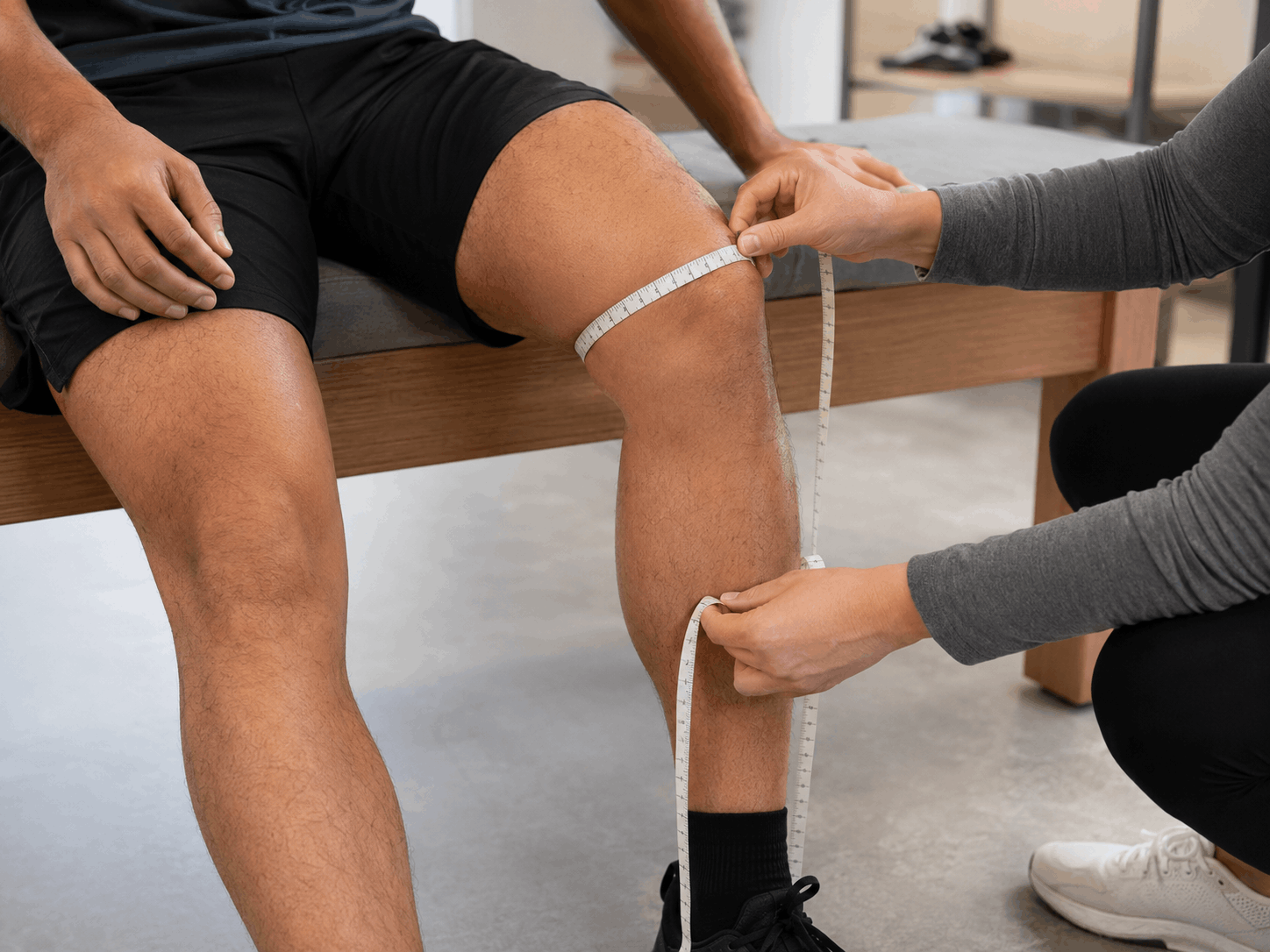
If the chart uses a distance such as 10 cm or 15 cm above the kneecap, state exactly where the user should begin and how the tape should be positioned. The tape should lie flat and snug without compressing the skin.
Avoid instructions such as “measure around the leg” because the same person may choose a different point each time. A simple photograph or diagram should show the kneecap reference and tape location.
Connect body measurements to finished-product measurements
The body chart alone does not control production. The technical specification should also define the finished sleeve:
- Top opening circumference
- Bottom opening circumference
- Total length
- Patella feature position
- Width or circumference at key zones
- Strap length and usable fastener area
- Allowed tolerance by measurement
These figures should be recorded in a relaxed state using one agreed method. If the factory stretches the sleeve during measurement while the inspection team does not, the same product can produce different results.
Grade sizes from performance, not from equal increments
Adding the same number of centimeters from one size to the next may look orderly, but it does not always create a consistent fit. Material stretch, leg shape, sleeve taper and compression target interact.
A better process is:
- Approve the base size on several intended users.
- Create preliminary smaller and larger grades.
- Test each size on users near the middle and edges of its proposed interval.
- Record ease of putting on, cuff pressure, movement, slippage and comfort.
- Adjust the finished measurements or body intervals.
- Repeat after washing if the product will be washed regularly.
Youth and plus-size models may require more than extending the same pattern. Length, taper and pressure-zone position may need separate adjustment.
Define what customers should do between sizes
Boundary cases are a frequent source of returns. Generic advice such as “size down for more compression” can create excessive pressure, while “size up for comfort” may produce slippage.
The correct guidance should come from wear testing. It may consider the wearer’s thigh and calf measurements, desired fit and product construction. If thigh and calf measurements fall into different sizes, the chart should explain which measurement has priority or recommend a model with a more suitable taper.
For adjustable braces, include the strap range and explain how much overlap is required for secure fastening. A strap that technically reaches the body is not necessarily long enough for stable use.