Knee Support Quality Control Checklist for Importers, Sports Brands and Retailers

Quick answer

A reliable knee support quality plan should control the approved sample, materials, measurements, compression feel, seams, anti-slip elements, straps or stabilizers, labeling and packaging. The buyer and manufacturer should agree on inspection methods, tolerances, defect categories and change approval before production begins. The most important principle is traceability: every bulk product should connect back to an approved specification and material lot.

Why visual inspection alone is not enough

A knee sleeve can look acceptable on a table and still fail during use. Common problems include inconsistent circumference, uneven compression zones, weak seam recovery, rolling cuffs, poorly bonded silicone, short straps, misaligned stays and packaging that causes size confusion.

These issues are difficult to solve after the goods are completed. Quality control should therefore begin with the product brief and continue through material approval, first-piece review, in-process inspection and final shipment sampling.

1. Lock the approved product standard

Before production, create one approval package that the sales, development, production and inspection teams can all access. It should include:

  • Approved physical sample or sealed reference
  • Revision-controlled specification sheet
  • Bill of materials with approved alternatives
  • Measurement chart and tolerances
  • Color standard and logo artwork
  • Component locations and orientation
  • Care label, barcode and packaging files
  • Inspection method and acceptance rules

If the product has been revised several times, mark obsolete samples and files clearly. Production should never depend on an unlabeled photo in a message thread.

2. Inspect incoming materials before cutting or knitting

Material variation can change the finished product even when the pattern stays the same. Incoming inspection should compare each lot with the approved standard.

For knitted sleeves

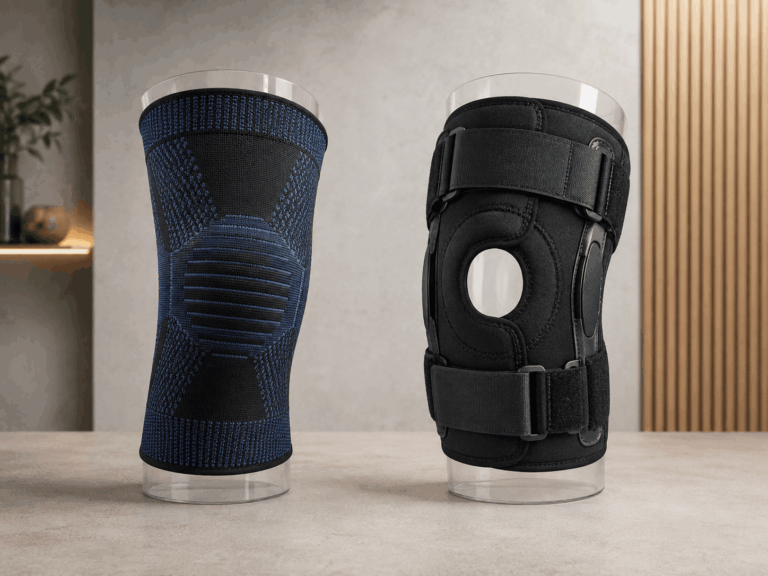
Check yarn color, composition documentation, visual texture, elasticity, recovery and any silicone grip material. Confirm that yarn or knit substitutions have written approval.

For neoprene and laminated fabrics

Check thickness, density or hand feel, surface fabric, lamination quality, odor and color. Inspect for bubbles, separation, creases and inconsistent thickness.

For adjustable braces

Check hook-and-loop engagement, elastic webbing, strap width, D-rings, buckles, stays, hinges, pads and binding. A component that looks similar may perform differently after repeated use.

3. Confirm the first production piece

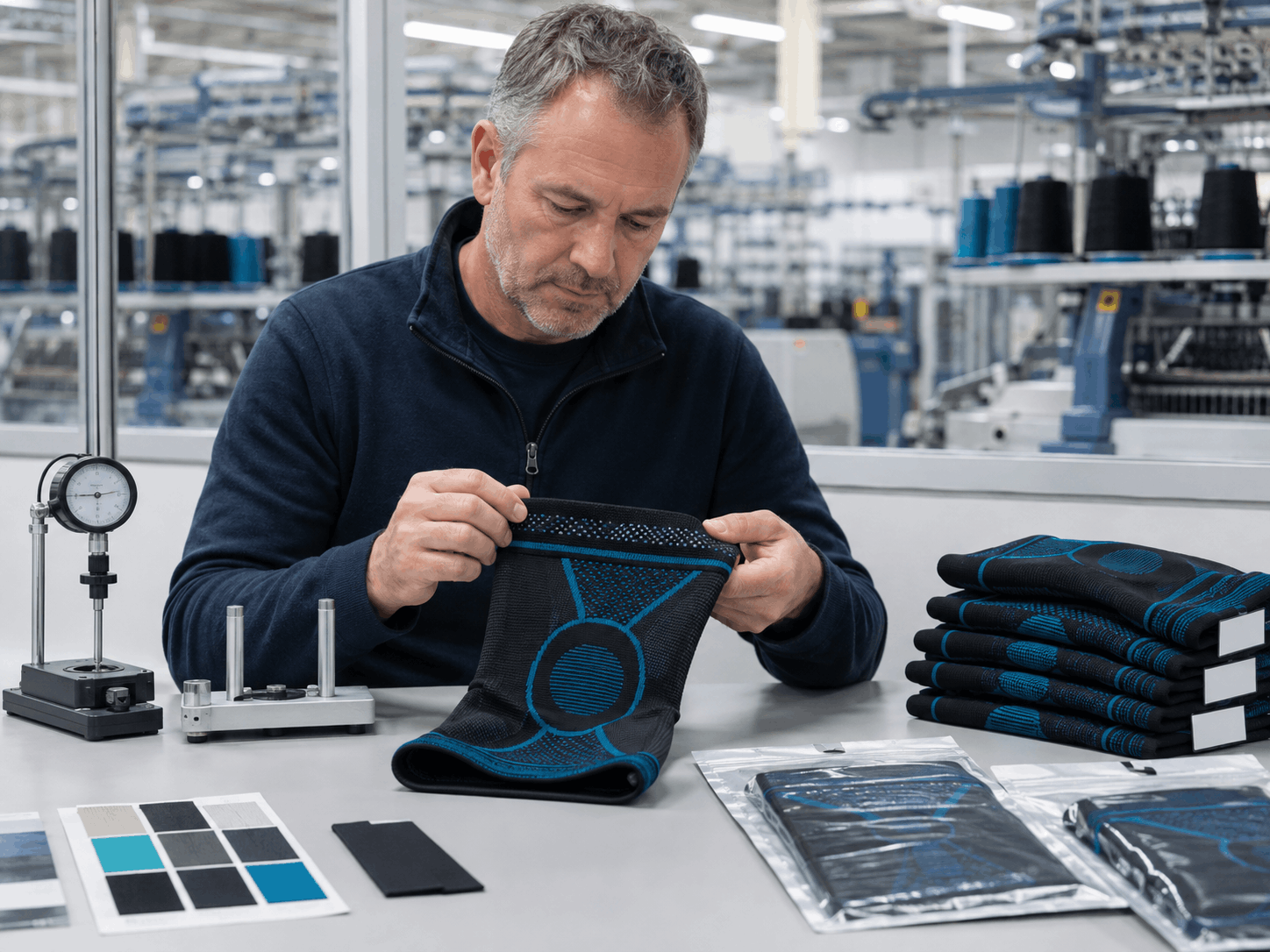
The first completed item from actual bulk materials is a critical checkpoint. Compare it with the approved sample before the line continues at full speed.

Confirm:

  • Overall shape and color
  • Finished measurements
  • Logo size, color and position
  • Compression-zone or panel alignment
  • Seam type and seam position
  • Cuff grip and edge finish
  • Strap direction and length
  • Stabilizer or pad location
  • Label content and orientation

Record the result and any corrective action. A first-piece approval prevents a small setup error from becoming a full-batch problem.

4. Control measurements and functional details during production

Do not wait until final inspection to measure products. Set in-process checks by size and production stage.

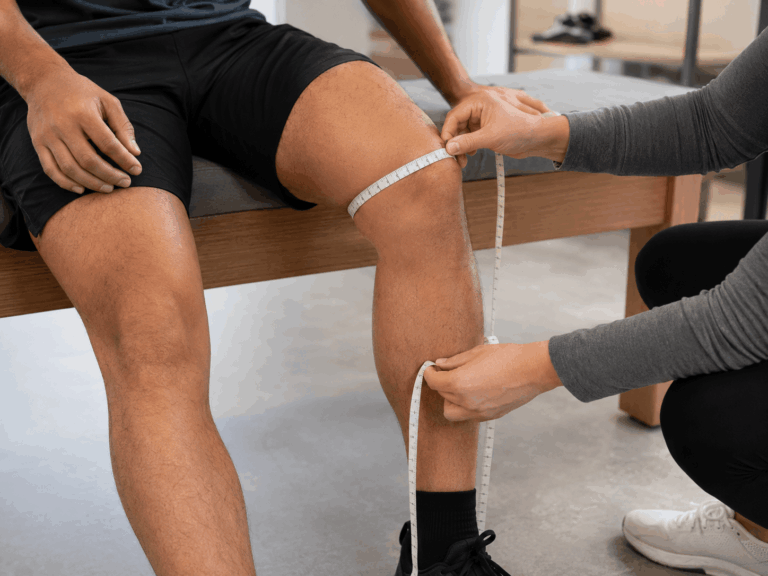
For knitted sleeves, monitor length, top and bottom circumference, patella-zone position, cuff width and visible knit defects. For neoprene sleeves, monitor thickness, taper, seam allowance, edge binding and print alignment. For braces, monitor strap length, usable fastener area, stay position and left/right orientation.

Use one measurement method. Products should be conditioned and measured in the same relaxed state, on the same surface and with the same reference points.

5. Test the details that create the user experience

Quality checks should reflect the intended use. A practical program may include:

  • Stretch and recovery checks
  • Repeated donning and removal
  • Seam and edge inspection under tension
  • Fastener open-close cycling
  • Strap pull and attachment review
  • Silicone grip adhesion and surface check
  • Washing and air-drying review
  • Wear test during the target movement
  • Odor, skin-contact finish and loose-thread inspection

The exact method and acceptance level should be defined for the product. Do not use an impressive test name without explaining what is measured and what result is acceptable.

6. Keep the bulk product aligned with the approved sample

Sample-to-bulk differences often come from unapproved material changes, production setup, size grading or finishing. Use side-by-side comparison at planned checkpoints, not only at the end.

Create a written change rule: if a material, color, component, measurement or process must change, production pauses until the new option is reviewed and approved. The approval should state whether a new sample, wear test or price confirmation is required.

7. Inspect labeling and retail packaging

Packaging errors can create returns even when the product is correct. Final inspection should confirm:

  • Model, color and size match the product
  • Single-unit or pair quantity is clear
  • Barcode and SKU match the order file
  • Care and material information match the approved artwork
  • Fitting instructions match the actual construction
  • Country or market-specific information is present when required
  • Pouch or box protects the product without excessive compression or deformation
  • Carton assortment and marks match the packing list

Scan sample barcodes and compare packed assortments with the order. A visually attractive box is not useful if the size sticker or product count is wrong.

8. Define final inspection before the order starts

Agree on the sampling plan, defect categories and release process in advance. Defects can be classified according to their effect on safety, function, appearance, labeling and saleability.

The inspection document should explain what happens if the result fails: sorting, rework, replacement, reinspection or another agreed corrective action. This avoids negotiation under shipment pressure.

Practical quality checklist

Inspection stage

Key controls

Evidence to retain

Product approval

Sample, specification, bill of materials and artwork

Signed or dated approval record

Incoming materials

Color, composition, thickness, stretch and components

Lot record and inspection result

First piece

Measurements, construction, logo and alignment

First-piece checklist and photos

In-process

Size data, seams, cuff, straps and stabilizers

Production inspection records

Functional review

Recovery, fasteners, grip, wash and wear

Test method and result

Final packing

SKU, size, barcode, quantity and carton marks

Final inspection report and packing list

Supplier questions that reveal quality maturity

  • Which items are checked before production starts?
  • How do you identify material lots and finished-product lots?
  • How are measuring tools maintained and verified?
  • What happens when an in-process result is outside tolerance?
  • Who can approve a material or process substitution?
  • How are old specification versions removed from production?
  • Can inspection records be provided with the shipment?

A useful answer describes a real process, owner and record. A vague promise that “quality is always good” is not a control plan.

Frequently asked questions

What is the most important knee sleeve inspection point?

There is no single point, but measurement consistency and comparison with the approved sample are fundamental. Fit depends on circumference, length, stretch, taper and cuff construction working together.

How can an approved sample be protected during production?

Keep a sealed reference, a dated specification and a bill of materials. Require written approval for substitutions and compare first pieces and bulk samples with the reference at planned checkpoints.

Should every knee support order include wash testing?

If washability is part of the product instructions, the selected material, logo and construction should be reviewed after the stated washing method. The scope can depend on product risk and previous validation.

What packaging errors are most common?

Incorrect size stickers, wrong barcodes, unclear single-versus-pair quantity, outdated instructions and mixed carton assortments are common preventable errors.

When should final inspection requirements be agreed?

Before production begins. Sampling rules, defect definitions, tolerances and actions after a failed result should not be decided when the shipment is already due.

Next step

Convert this checklist into a product-specific inspection sheet. Add your model number, material, measurements, tolerances, functional checks, packaging details and approval owners. Learn more about the ProBalanceSport development workflow or use the contact page to request a quality-plan review with your quotation.

Table of Contents

Related Articles

Contact Us Today — Get a Reply Within 12 Hours

Factory-direct · NDA friendly · Sample support · OEKO-TEX/BSCI (on request)

Your information will be kept strictly confidential.