Why knee support sourcing becomes difficult
Many knee sleeves look similar in a catalog, but small construction differences change fit, comfort, durability and perceived value. A product described only as “elastic, breathable and supportive” is not ready for accurate quotation. Those words do not define yarn composition, sleeve length, compression feel, knit density, cuff grip, logo method, size intervals or packaging.
This creates familiar problems: quotations that cannot be compared, samples that do not match the intended use, inconsistent sizing, late price changes and bulk goods that feel different from the approved sample. The solution is to evaluate the supplier’s specification process before evaluating the final price.
Start with the use case, not the supplier catalog
A useful product brief answers five questions:
Who will wear the product?
Which activity will they perform?
How long will the support normally be worn?
What level of flexibility or stabilization is expected?
What retail position and packaging format must the product support?
A lightweight running sleeve, a 7 mm lifting sleeve and an adjustable open-patella support should not share the same material, fit or test plan. When the use case is clear, the manufacturer can recommend a construction rather than simply sending popular models.
Compare material and construction capability
Seamless knitted compression sleeves
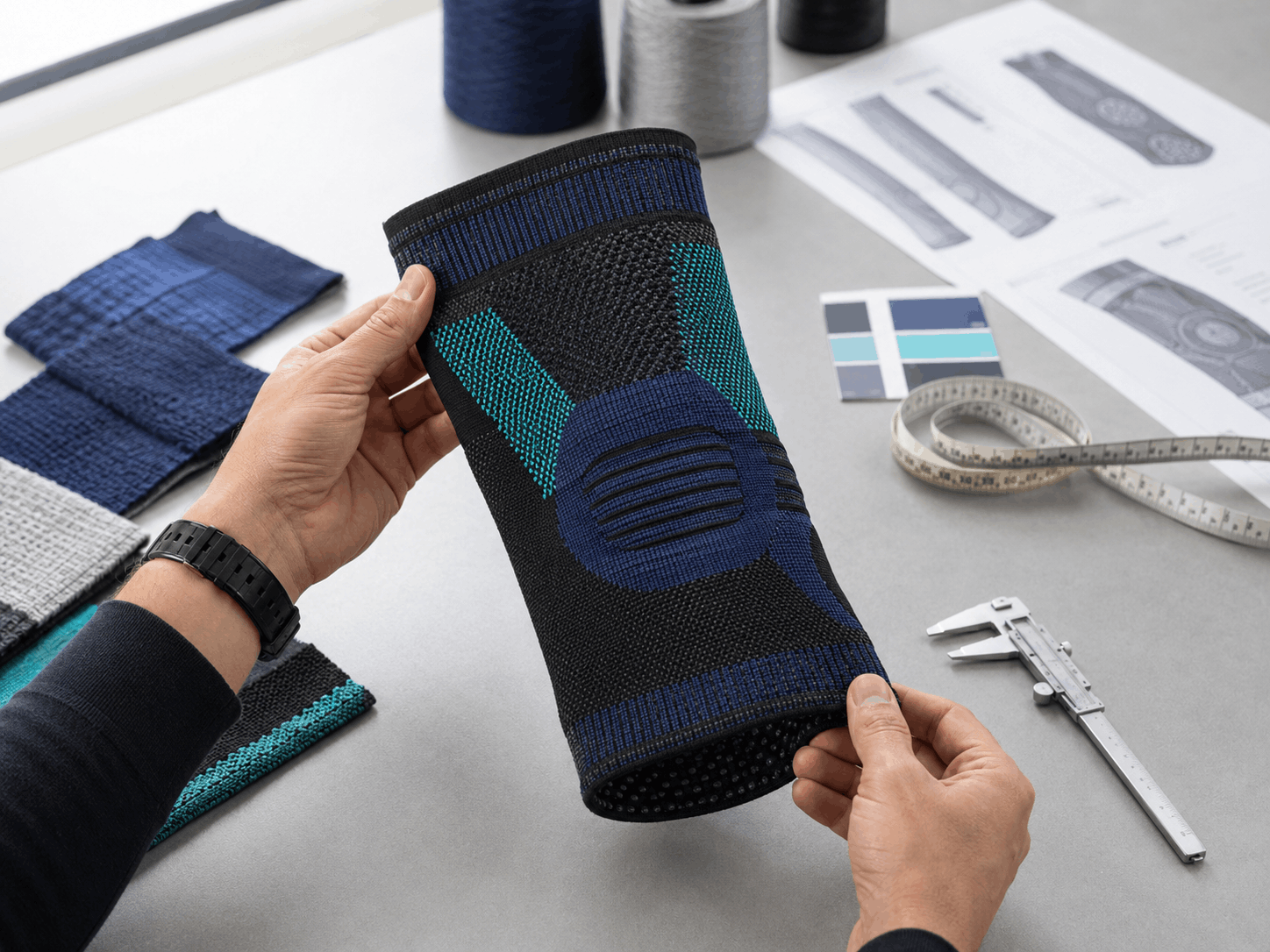
Polyamide, polyester and elastane blends are commonly used for low-profile sleeves. Zoned knitting can create breathable areas, flexible bend zones and firmer sections around the knee. Buyers should ask how the supplier controls yarn composition, knit density, finished circumference and stretch recovery across sizes.
Neoprene or foam-laminated sleeves
These constructions provide warmth, body and a firmer feel. Thickness, foam density, lamination, edge binding and seam type all influence performance and cost. A nominal 5 mm or 7 mm description is not enough; the finished sample should be checked for thickness consistency, odor, flexibility and seam comfort.
Adjustable and structured supports
Straps, hook-and-loop fasteners, patella pads, side stays and hinges add more components and sewing operations. Ask for a component list and confirm whether stabilizers are removable, how strap ends are secured and whether replacement materials require approval.
Define “support” in measurable product terms
Vague compression labels create disputes. Instead of relying only on “light,” “medium” or “strong,” define the construction variables that create the intended feel:
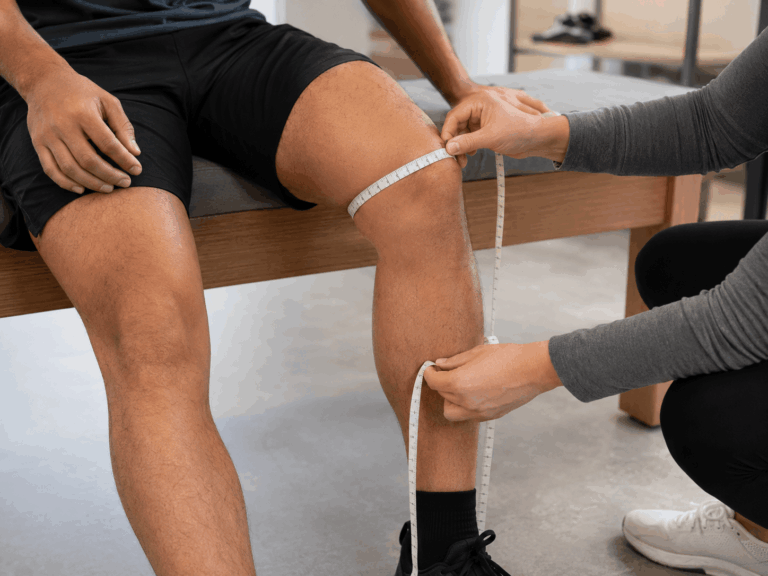
Finished circumference and length by size
Yarn or foam specification
Stretch and recovery method
Compression-zone placement
Cuff width and anti-slip design
Strap length and adjustment range
Patella opening or pad position
Acceptable dimensional tolerances
The approved wear sample should become the reference for feel, while the specification sheet controls the measurable details.
Use sampling to expose risk before production
A useful sample process is not just a logo mockup. It should confirm fit, movement, material, color, branding and packaging. Before approving the sample, test it during the intended activity and record the result.
Check whether the sleeve rolls down, slips, bunches behind the knee, pinches at the cuff or loses shape after repeated use. For adjustable supports, inspect strap reach, fastener engagement, stabilizer alignment and comfort during flexion. If changes are made, issue a dated revision instead of relying on chat messages alone.
The final approval package should include:
Approved physical sample or sealed reference sample
Bill of materials
Measurement chart with tolerances
Color references
Logo artwork and placement
Care label and packaging files
Agreed inspection points
Written change-approval process
Evaluate consistency, not only capacity
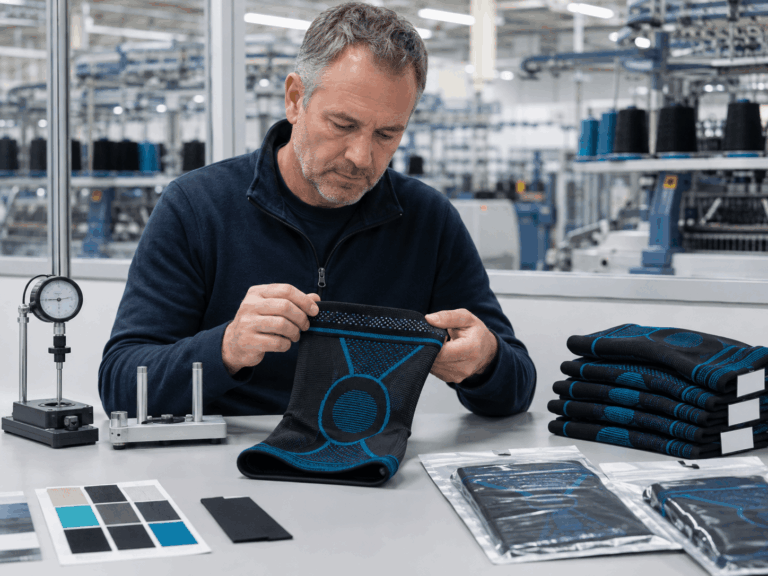
Large production claims do not prove consistent execution. Ask how incoming materials are checked, how size measurements are recorded and how the factory handles a failed inspection. A reliable manufacturer should be able to explain material approval, first-piece confirmation, in-process checks, final sampling and lot traceability in plain language.
Also confirm how the supplier protects the approved specification when yarn, foam, silicone, fasteners or packaging materials are unavailable. Substitution without written approval is a major risk because it can change color, hand feel, compression and durability.
Compare quotations on the same specification
A low quotation may exclude details that another quotation includes. Before comparing prices, align the following: