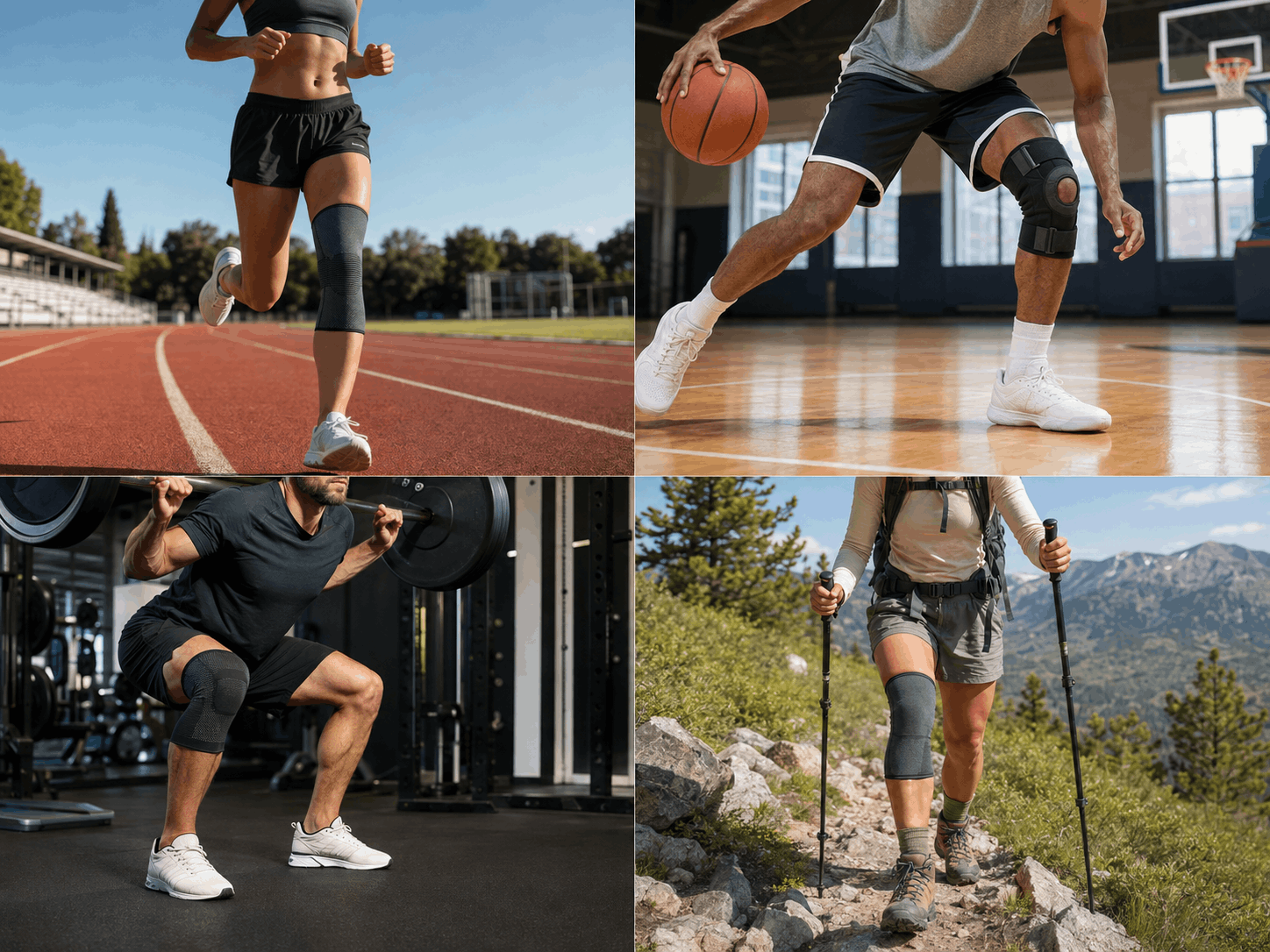
controlled lateral support without excessive bulk; weight training often requires firmer compression and robust seams; hiking favors long-wear comfort, moisture management and reliable anti-slip performance. A product range becomes easier to understand and sell when each model has a specific activity, support level and reason to exist.
Why one universal knee support rarely serves every activity
Using one sleeve for every sport may simplify inventory, but it often creates an unclear product promise. The movements of a long-distance runner are different from the pivots of a basketball player, the deep knee flexion of a lifter and the prolonged walking of a hiker.
When the same construction is marketed for all four activities, buyers may struggle to explain why the product is suitable, and users may experience heat, slippage, unnecessary bulk or insufficient stability. A better assortment begins with movement analysis and then selects the minimum structure needed for that scenario.
Running and track: prioritize low-profile support
Running involves repeated flexion, sweat and thousands of movement cycles. A thick brace may feel restrictive, while a poorly graded sleeve can slide as the leg changes shape during motion.
Useful design features include:
- Lightweight seamless knit
- Breathable zones behind the knee
- Smooth edges that reduce rubbing
- Moderate, even compression
- A cuff that grips without pinching
- Low-bulk construction that fits under running apparel
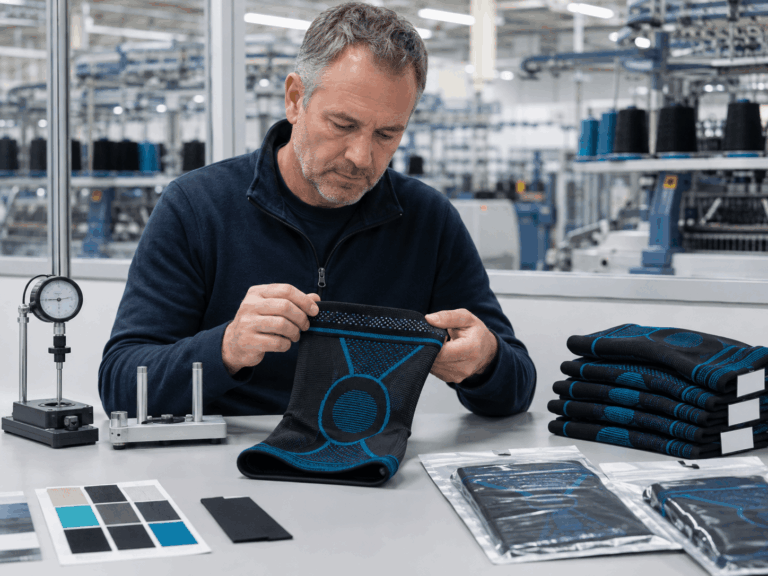
For a running-focused model, wear testing should include continuous movement rather than a short standing fit check. Record cuff movement, bunching behind the knee, moisture comfort and shape recovery after use.
Long-tail product angle: custom breathable running knee sleeve with anti-slip cuff.
Basketball and court sports: balance movement and lateral control
Basketball, tennis, padel and volleyball combine acceleration, stopping, pivoting and jumping. The product must move quickly with the athlete while maintaining a stable position.
A medium-support sleeve may include firmer knit zones, a shaped patella area or flexible side stabilizers. An adjustable brace may be more suitable when the concept requires greater structure, but the design should not become so bulky that it interferes with footwork or catches on clothing.
Key development questions include:
- Does the support stay aligned during rapid direction changes?
- Can the athlete bend deeply without strap pressure behind the knee?
- Are side components flexible enough for court movement?
- Does the product fit comfortably under team apparel?
- Is the left/right or universal construction clear to the user?
Long-tail product angle: adjustable basketball knee support with flexible side stabilizers.
Weight training: focus on compression feel and seam durability
Squats, lunges, Olympic lifting and strength training place the sleeve under deep flexion and repeated high tension. Neoprene or foam-laminated sleeves are commonly selected when a firm, warm and substantial feel is part of the product concept.
Important variables include thickness, foam density, taper, seam angle, edge finish and whether the product is sold as a single sleeve or a pair. A thick sleeve with an incorrect taper can be difficult to pull on, while a weak seam position may become uncomfortable or fail under repeated use.
Test the product during the intended depth of movement. Inspect seam stretch, edge rolling, material creasing and recovery after the sleeve is removed. Packaging must state clearly whether the pack contains one sleeve or two.
Long-tail product angle: custom 5 mm or 7 mm knee sleeves for strength training.
Hiking and walking: design for comfort over time
Hiking and long-distance walking require less bulk and greater long-wear comfort. Heat, moisture, uneven terrain and repeated elevation changes can expose cuff slippage and pressure points that are not obvious during a short fitting.
A suitable design may use a soft breathable knit, gentle compression, smooth seams and a reliable but skin-conscious anti-slip cuff. For travel and outdoor retail, compact packaging and easy care can also improve the product proposition.
Wear testing should include stairs or inclines, several hours of use and repeated removal. Check whether the sleeve leaves excessive marks, accumulates moisture, rolls down or becomes uncomfortable behind the knee.
Long-tail product angle: lightweight knee support for hiking and long-distance walking.