What Is a Patella Band? How It Works, Fits and Supports Movement
A patella band is a narrow, adjustable knee support worn directly below the kneecap. It applies focused pressure across the patellar tendon while leaving most
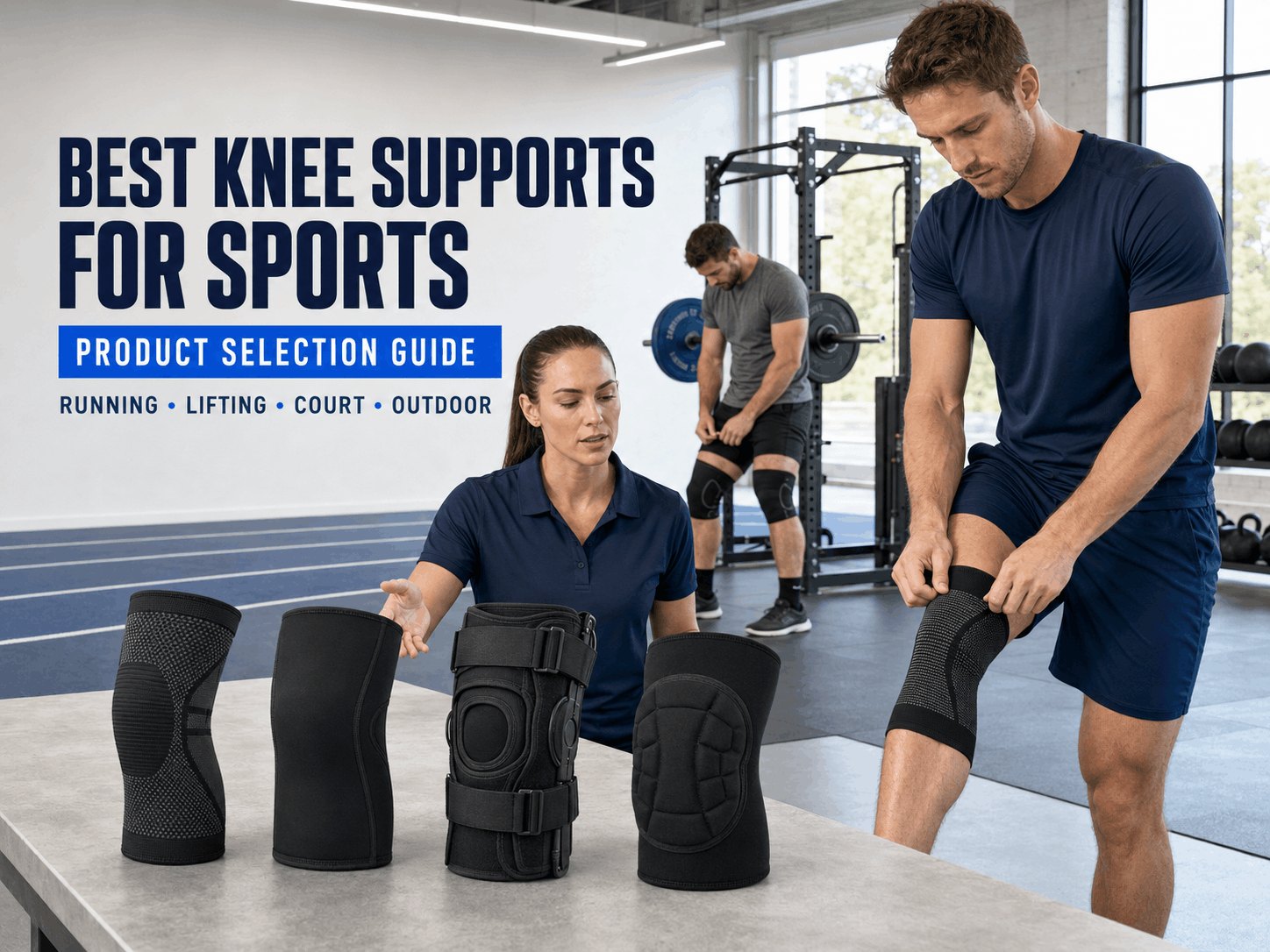
The best knee support for running is not necessarily the best option for powerlifting, basketball, volleyball or hiking. Each activity creates different expectations for mobility, compression, impact protection, heat retention and stability.
For brands, importers, distributors and retailers, this means product selection should begin with the target activity and customer—not with a generic catalog photo. The right assortment must also balance comfort, sizing, durability, retail positioning, customization and destination-market requirements.
This guide compares the main types of sports knee supports and explains what buyers should define before starting private-label or custom development.
Quick answer: A lightweight knitted sleeve is a strong starting point for running and everyday training. Neoprene sleeves suit strength and lifting ranges, while adjustable stabilizer braces serve customers seeking more structured support. Padded knee supports are better suited to sports involving frequent floor contact. Hinged products belong in specialist ranges where fitting, instructions and compliance can be managed carefully.
Knee sleeves and braces can provide different levels of compression, warmth, cushioning or structural support. A functional knee brace is generally intended to offer stabilization and support around the knee joint, as described in this NHS knee support and brace guide.
However, a knee support should not be presented as a replacement for conditioning, technique, rehabilitation or professional advice. The American Academy of Orthopaedic Surgeons notes that strengthening the muscles supporting the knee helps reduce joint stress and improve shock absorption.
For product marketing, it is safer and more accurate to describe measurable functions such as compression, adjustability, cushioning, warmth or medial-lateral support. Avoid promising that a general sports support will prevent every injury, repair damaged tissue or guarantee faster recovery.
| Sport or use case | Recommended product structure | Useful design features | Key buyer considerations | Product-line role |
|---|---|---|---|---|
| Running and endurance | Lightweight knitted compression sleeve | Breathable zones, four-way stretch, moisture management, anti-slip cuff, low-profile seams | Heat buildup, slipping, edge rolling, size consistency and wash performance | High-volume entry product |
| General gym and functional training | 3–5 mm neoprene or hybrid compression sleeve | Moderate warmth, flexible support, reinforced seams and anatomical shaping | Flexibility, odor control, comfort behind the knee and seam durability | Versatile mid-range training product |
| Weightlifting and powerlifting | 5–7 mm neoprene lifting sleeve | Dense neoprene, strong rebound, tapered fit and reinforced stitching | Thickness tolerance, paired symmetry, tight fit, seam strength and sport-specific positioning | Premium strength product |
| Basketball, tennis and court sports | Flexible stabilizer brace or compression sleeve with stays | Lightweight side stays, adjustable straps, breathability and secure retention | Freedom of movement, bulk, strap migration and stability during direction changes | Performance-focused upgrade |
| Volleyball, wrestling and floor-contact sports | Padded knee sleeve or knee pad | Impact foam, abrasion-resistant face fabric, flexible back panel and secure grip | Padding position, rebound, floor friction, coverage and durability | Team-sport and protective product |
| Hiking, walking and outdoor use | Lightweight or moderate compression support | Breathable fabric, soft edges, anti-slip cuff and all-day comfort | Climate, long-wear comfort, moisture management and easy care | Outdoor and lifestyle product |
| Specialist stability or rehabilitation | Hinged or range-of-motion brace | Bilateral hinges, reinforced pockets, adjustable straps and controlled movement | Correct fitting, hinge alignment, instructions, component testing and market compliance | Specialist high-value product |
Planning a new sports-support range? Share the target sport, destination market, preferred support level, estimated quantity and launch schedule. ProBalanceSport can recommend one or two suitable product structures before sampling.
Running products should remain light, breathable and stable over repeated movement. A bulky brace may interfere with stride or create heat buildup, so a knitted compression sleeve is often the most commercially versatile option for recreational running, track training and endurance retail.
Important design details include breathable knit zones behind the knee, smooth seams, a reliable anti-slip cuff and enough elasticity to accommodate changes in muscle shape during movement. Buyers should test for downward migration, top-edge rolling and inconsistent compression between sizes.
For hot climates, prioritize lightweight yarns and moisture management. For colder markets, a slightly denser knit or thin neoprene construction may support a different seasonal position.
General gym users usually need more flexibility than competitive lifters. A 3–5 mm neoprene or hybrid sleeve can provide warmth and structure while still allowing comfortable movement through squats, lunges and mixed training.
Lifting-focused lines often use denser 5–7 mm neoprene. A 5 mm sleeve can serve broader strength-training demand, while a 7 mm construction creates a stiffer, more specialized product for heavy lifting. Thickness should be treated as a controlled specification rather than a marketing label. Buyers should confirm neoprene density, finished thickness, left-right symmetry, seam strength and rebound consistency.
The shape also matters. A tapered or anatomically curved pattern may improve the fit around the thigh, knee and calf, but the grading must be tested across the entire size range.
Court sports involve acceleration, rapid stops, jumps and direction changes. Product design must balance support with mobility. For broad retail ranges, a knitted sleeve with flexible side stays or an adjustable low-profile brace is usually easier to wear than a large rigid construction.
Check whether stays remain aligned during deep bending, whether straps loosen after repeated movement and whether the brace adds uncomfortable bulk behind the knee. Materials should also manage perspiration and repeated washing.
If the line targets impact protection rather than joint stabilization, consider a padded sleeve as a separate product instead of trying to combine every function into one brace.
These sports require protection against floor contact, friction and repeated kneeling or diving. The AAOS volleyball safety guidance recommends knee pads to help protect against injury during falls and dives.
For product development, padding placement is critical. The foam must remain over the intended impact zone during movement without making the product too rigid. Buyers should evaluate foam rebound, thickness consistency, abrasion resistance, stitching around the pad and the sleeve’s ability to stay in position.
Different channels may prefer a compact volleyball pad, a longer padded sleeve or a low-profile compression style. These should be treated as separate constructions with clearly defined uses.
Outdoor customers often prioritize comfort over maximum structure. A support intended for long walks or hiking should remain breathable, resist slipping and avoid pressure points over extended wear.
Soft edge binding, moisture management and an anti-slip cuff can be more important than adding another strap or rigid component. Consider destination climate, typical wear duration and whether the product needs to fit discreetly under outdoor clothing.
Hinged and range-of-motion braces provide more structured support and introduce additional technical requirements. Hinges must align correctly with the knee, straps must maintain their position and component pockets need reinforcement. A range-of-motion design may also limit flexion or extension according to professional instructions; this NHS range-of-motion brace guide explains how these settings can be controlled by a physiotherapist or orthotist.
These products can support a higher-value specialist range, but they require stronger fitting guidance, component testing, documentation and claims review than a general sports sleeve.
The product name alone does not define the support level. Buyers should distinguish each construction by function and channel.
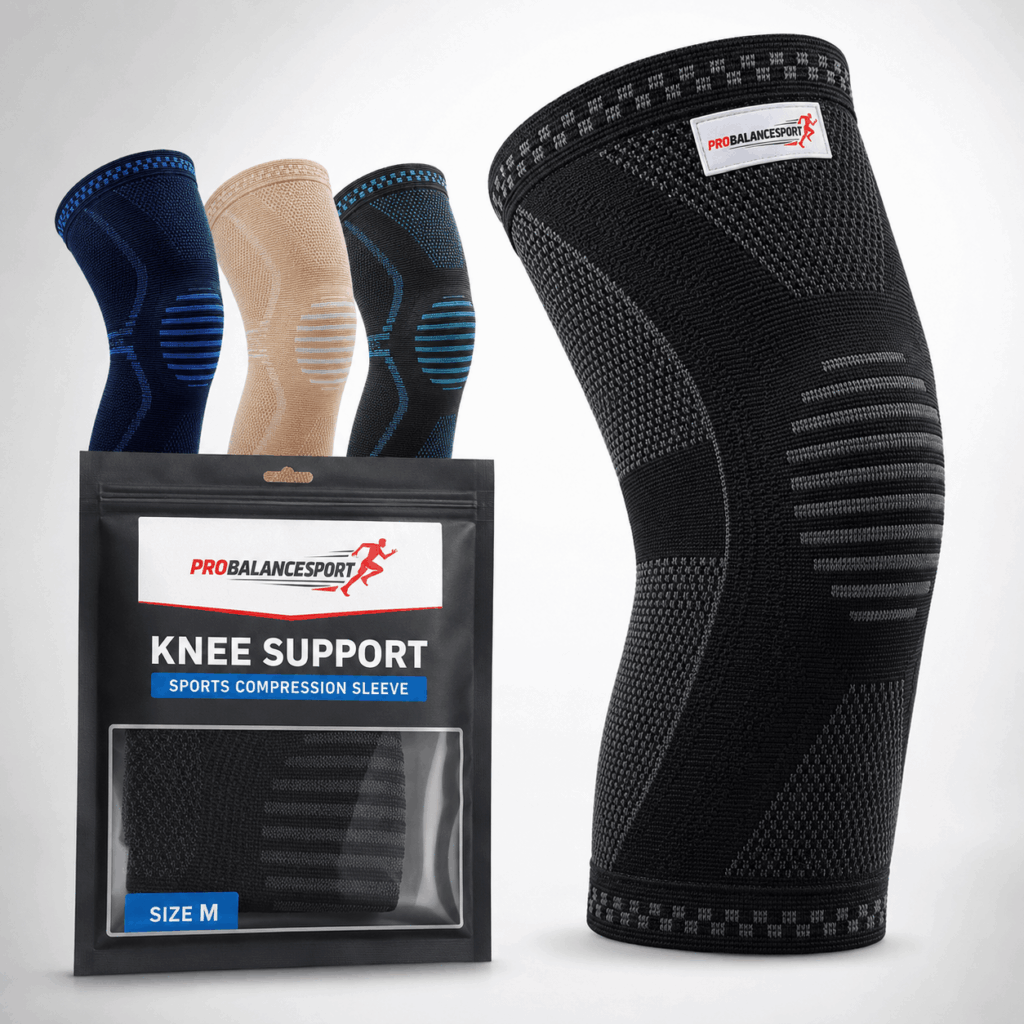
Best suited to broad fitness, running and everyday training ranges. It offers a low-profile fit and can be differentiated through knitting zones, material weight, colors, logo integration and grip design.
Designed for customers who want adjustable compression and more structure than a basic sleeve. Common features include wraparound panels, hook-and-loop straps and flexible side stays. Fit range and strap durability are major quality considerations.
Built with dense neoprene and a tighter fit for strength-focused retail. Thickness, density, shape, paired consistency and reinforced seams are more important than adding decorative features.
A compact accessory positioned below the kneecap. It can create an accessible add-on product for running and court-sport ranges. Pressure-pad shape, strap comfort, adjustability and secure fastening should be confirmed during sampling. Avoid using a narrow strap as a substitute for a higher-support brace.
For a broader comparison of knee straps, tape and braces, read Knee Strap, Knee Tape, or Brace?
Designed for impact and abrasion protection in volleyball, wrestling, basketball training and similar activities. Foam position, coverage, rebound and retention are the main development priorities.
A specialist product offering greater medial-lateral structure. It requires precise hinge placement, durable pockets, reliable straps and clear fitting instructions. Medical or rehabilitation claims require additional review for the destination market.
A practical starter range can be built around five distinct products:
Lightweight Running Sleeve: breathable knit, low profile and broad retail appeal.
5 mm Training Sleeve: flexible neoprene for gym and general strength activity.
7 mm Lifting Sleeve: denser construction for a premium strength position.
Adjustable Stabilizer Brace: straps and flexible stays for a higher-support option.
Padded Team-Sport Support: impact padding for volleyball and floor-contact activity.
This structure gives each item a clear purpose, reduces overlap between products and makes comparison easier for sales teams and customers. A patella strap or hinged brace can be added later when the channel requires a specialized accessory or higher level of structure.
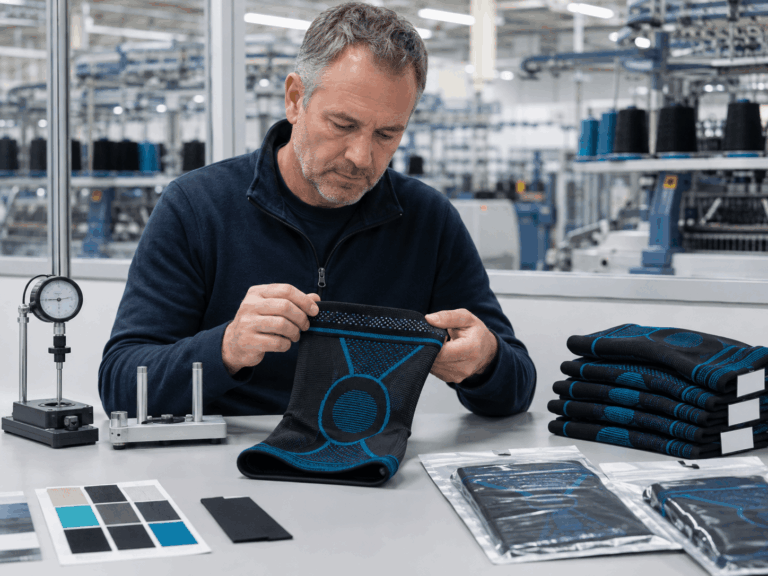
Define fiber composition, finished weight, stretch, recovery, compression zones, breathability and anti-slip construction. If using a jacquard logo, approve the appearance at actual production size and confirm that branding does not create a rigid or uncomfortable area.
Specify finished thickness, density, lamination fabric, odor requirements, stretch direction and thickness tolerance. A product described as “7 mm” should be verified against an agreed measurement method rather than approved by name alone.
Confirm strap length, adjustment range, peel strength, edge softness and performance after repeated opening. Hook areas should not damage surrounding fabric or exposed skin.
Define material, length, flexibility, position and retention method. For hinges, include alignment, movement, cycle testing, corrosion resistance and pocket reinforcement in the inspection plan.
Specify foam type, thickness, density, rebound, coverage and position. Test whether the pad shifts, creases or becomes permanently compressed after repeated use.
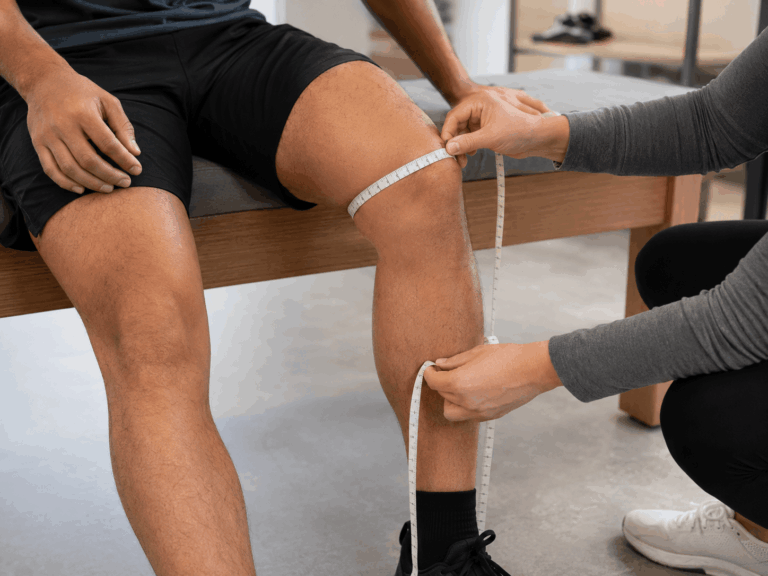
An attractive design cannot compensate for an unreliable size chart. Poor grading leads to slipping, edge rolling, uncomfortable pressure and returns.
Your specification should identify:
Exact measurement points above, at or below the knee
Finished circumference and length for each size
Target stretch or compression range
Thigh-to-calf proportion
Size overlap and boundary guidance
Unisex, youth, extended-size or sport-specific fit requirements
Approve each size—not only the medium sample. If possible, conduct wear trials on several body types and include sport-relevant movements such as running, squatting, jumping, kneeling or changing direction.
Before bulk production, agree on measurable specifications and an inspection plan covering:
Material composition, weight, thickness and color
Finished dimensions and size tolerances
Stretch and recovery performance
Compression consistency where applicable
Seam strength and bar-tacked stress points
Edge comfort and resistance to rolling
Anti-slip performance during movement
Strap position and adjustment range
Hook-and-loop durability after repeated use
Stay or hinge alignment, retention and cycle performance
Foam rebound and abrasion resistance for padded models
Wash appearance, logo durability and colorfastness
Labels, warnings, instructions, barcodes and retail packaging
The approved sample, specification sheet, color standard and packaging file should remain the reference for production and repeat orders.
Useful private-label and custom options can include:
Sport-specific materials and thicknesses
Open- or closed-patella construction
Compression zones, straps, stays, hinges or padding
Custom size grading from XS to extended sizes
Pantone-matched colors
Jacquard, heat-transfer, silicone-print or TPU branding
Care labels and multilingual instructions
Retail boxes, pouches, multipacks and barcodes
The strongest product difference usually comes from fit, material, structure and packaging working together—not from placing a logo on a standard item.
Explore ProBalanceSport’s custom knee sleeves and supports and OEM/ODM development options for available development routes.
The intended purpose and marketing claims can affect how a product is regulated. A general fitness sleeve and a product promoted for medical treatment may follow different requirements even when they look similar.
In the United States, the FDA database lists external knee braces intended for medical purposes under product code ITQ as Class I and 510(k)-exempt. Exemption from 510(k) does not automatically remove every establishment, listing, labeling or quality obligation. Confirm the responsibilities for the exact product and supply chain through the FDA external knee brace classification.
For the European Union, intended purpose is central to the application of the EU Medical Device Regulation. Buyers should define the market, claims and responsible parties before finalizing packaging or testing.
Avoid unsupported wording such as “prevents ACL tears,” “treats arthritis,” “repairs injuries” or “speeds recovery.” Functional language around compression, adjustability, cushioning, warmth and support should still match the product and available evidence.
For a useful recommendation and accurate quotation, provide:
Destination country and sales channel
Target sport and intended customer
Preferred product type and support level
Material, thickness and structural features
Size range and estimated quantity by size
Logo method, colors and packaging requirements
Required documentation or third-party testing
Target price position, delivery date and destination
If the product structure is not yet decided, share the commercial goal—for example, “a breathable running sleeve for outdoor retail” or “a premium 7 mm lifting sleeve for strength athletes.” A capable development partner should narrow the project to one or two suitable constructions before sampling.
ProBalanceSport is a China-based product development and sourcing partner for international brands, importers, distributors and retailers. We coordinate private-label, semi-custom and full-custom sports-support projects through a specialized manufacturing network.
For many standard private-label knee-support models, our published starting MOQ is 500 units. Typical sample development is approximately 5–7 days, with bulk production commonly taking 15–25 days after sample and specification approval. Timing and MOQ depend on materials, structure, components, size breakdown, packaging and the final order plan.
Project support can include:
Product structure and material recommendations
Sport-specific sizing and feature development
Logo, color and retail-packaging coordination
Sampling and specification confirmation
Production follow-up and quality coordination
Third-party testing coordination for the target market
Export and delivery support
Send us your target sport, destination market, sales channel, estimated quantity, preferred support level, branding requirements and launch schedule. We will help identify the most suitable product route before preparing a quotation.
Email: info@probalancesport.com
WhatsApp: +86 135 1171 8562
Product category: Custom Knee Sleeves & Supports
A lightweight knitted compression sleeve is usually the most versatile option for broad running and endurance ranges. Prioritize breathability, low-profile seams, moisture management, anti-slip performance and consistent sizing.
A 5 mm neoprene sleeve generally offers more flexibility for mixed gym and strength training, while a denser 7 mm sleeve creates a stiffer, more specialized lifting product. The best choice depends on the target athlete, training style and retail position.
A sleeve primarily provides compression, warmth and a close fit. A stabilizer brace adds features such as straps or flexible side stays for more adjustable and structured support. The brace usually requires more fitting guidance and component testing.
Yes. Options can include custom colors, size grading, jacquard logos, heat-transfer graphics, silicone prints, TPU badges, care labels, instructions, retail boxes, pouches and barcodes.
ProBalanceSport’s published starting MOQ for many standard private-label knee-support models is 500 units. Custom knitting, special colors, multiple sizes, molded parts, hinges, padding or packaging may change the MOQ.
Typical sample development is approximately 5–7 days after specifications are confirmed. Bulk production commonly takes 15–25 days after sample approval. Custom components, testing, packaging and peak-season capacity may affect the schedule.
Provide the target sport, destination country, sales channel, preferred construction, material, thickness, size range, quantity, logo, packaging, documentation needs and delivery target. A reference image, technical drawing or physical sample can shorten development time.
Medical and regulatory disclaimer: This article provides general product-selection and sourcing information. It does not provide medical advice, diagnosis, treatment recommendations or legal and regulatory advice. End users should follow guidance from qualified healthcare professionals, and buyers should confirm all destination-market requirements for the exact product and claims.

Hi, I’m Jack Wang (the CEO of Natiprol Lianyungang Corporationh), hope you like this article.
With more than 10 years of experience in sports support industry since 2008, I’d love to share with you the valuable knowledge from a Chinese supplier’s perspective.
I am looking forward to talking with you about your ideas and thoughts.

A patella band is a narrow, adjustable knee support worn directly below the kneecap. It applies focused pressure across the patellar tendon while leaving most
Quick answer A reliable knee support quality plan should control the approved sample, materials, measurements, compression feel, seams, anti-slip elements, straps or stabilizers, labeling and
Why sizing is a commercial problem, not just a technical detail Fit affects product reviews, support tickets, return costs and repeat purchases. If a sleeve
Factory-direct · NDA friendly · Sample support · OEKO-TEX/BSCI (on request)

Start a Conversation
Hi! Click one of our member below to chat on WhatsApp
Hey, how can I help you today?